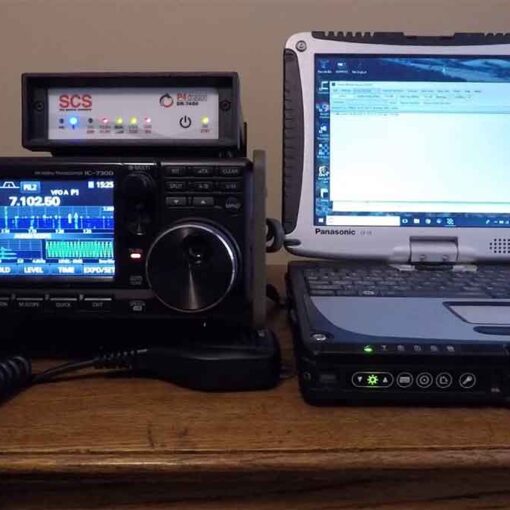
What is PACTOR? PACTOR (or now called PACTOR I) arose to cover the shortcomings of PACKET and AMTOR. It behaves very well […]
Bill — Evans Peace Piece Midi
You don't want the audio; you want the data . A good MIDI file allows you to open the piano roll and see the exact voice leading. You can isolate the right hand to study Evans’ pentatonic scales or slow the left-hand leap from C to G/D to 20 BPM without changing pitch.
MIDI measures note velocity (how hard a key is struck) on a scale from 1 to 127. In "Peace Piece," Evans’ velocity mapping is incredibly nuanced. The left-hand ostinato stays gently leveled around a quiet velocity of 40 to 50. The right-hand melodies dynamically arc from a whispered 45 to expressive peaks of 85. This stark dynamic separation allows the melody to sing over the accompaniment without overpowering it. Unquantized Freedom
The steady left-hand pattern creates a "static calm," providing a, "unifying, grounding element". The Right-Hand Exploration
| Setting | Recommendation | |---------|----------------| | | High-quality sampled grand piano (e.g., Pianoteq, Keyscape, Noire) – not GM piano. | | Reverb | Moderate hall reverb (2–3s decay) to emulate Van Gelder Studio. | | Tempo map | Insert gradual tempo slowdowns at phrase endings. | | Pedal events | Edit CC64 so pedal releases between left-hand chord changes, not on beat. |
For pianists, music theory students, and jazz enthusiasts, "Peace Piece" is a masterclass in improvisation. Because the piece is almost entirely improvised, transcribing it from the audio to sheet music can miss the subtle dynamics of Evans' touch. bill evans peace piece midi
If you are a guitarist, a producer, or a student, you have legitimate reasons for seeking this file beyond mere plagiarism.
When you look at a MIDI file of "Peace Piece," the left-hand data appears as a perfectly uniform, visual grid. The notes C-E-G-B alternate mechanically with G-C-D-F. This rhythmic stability is crucial; without this predictable pulse, the fluid, floating nature of the right-hand melody would collapse into chaos. Analyzing the Right Hand: Micro-Timing and Rubato
When searching for or creating a MIDI file of this track, look for or implement the following:
Evans superimposes localized bitonal structures (such as playing in E major or G-flat major simultaneously against the left hand's C major). You don't want the audio; you want the data
It is a masterclass in tension and release, tranquility, and emotional depth. 2. Why Use a "Peace Piece" MIDI File?
For lo-fi hip-hop and ambient producers, "Peace Piece" is a goldmine. The ostinato is a perfect sample for chopping or looping. A MIDI file allows a producer to assign the notes to a different instrument—perhaps a dusty Rhodes piano, a felted upright, or a synthesizer pad—creating a new texture while retaining Evans’ melodic architecture.
[MIDI Track 1: Left Hand] |: Cmaj7 (Velocity: 45) ----> G7sus4 (Velocity: 42) :| The Velocity Micro-Timing
The right-hand MIDI notes cluster neatly on the white keys (C major/Lydian modes). MIDI measures note velocity (how hard a key
: Analysis often draws parallels between "Peace Piece" and Chopin’s Berceuse , noting how both use an ostinato as a grounding element for evolving melodic "flowers".
The emotional arc of "Peace Piece" is dictated entirely by velocity manipulation. The piece starts in a whisper, swells to an agitated, bird-like flutter of complex intervals, and cascades back down into silence. Right-Hand MIDI Velocity Range Musical Characteristics 0:00 - 1:30
"Peace Piece" is a masterclass in how limitation can breed absolute freedom [1]. By studying its MIDI data, we gain a deeper appreciation for Bill Evans—not just as a legendary jazz icon, but as an architect of pure, timeless sound.


One thought on “Yaesu FTDX-10, FT8 & JTDX”
Hello
Well I have to say you are the only person on the web that knows how to tell people how to set up the FTdx10 and the computer… I watched many videos and read many articles and none worked for me… I gave up and my son found your article abt setting it up and had the thing running in abt 40 minutes… I’m going to be using the radio in a remote location 50 km away… Thank you for the great info…
Good DX and 73
Fred W0PE
I have passed your link to a bunch of people…